

Table of Contents
Ever dreamed of having your own personal copy editor?
Well, ChatGPT can help you with that if you give it the right prompts and instructions.
In this article, I’m going to share the exact prompt sequence I use personally to turn ChatGPT into a rigorous critique and editor for my drafts.
Should You Use ChatGPT to Edit or Generate Your Writing?
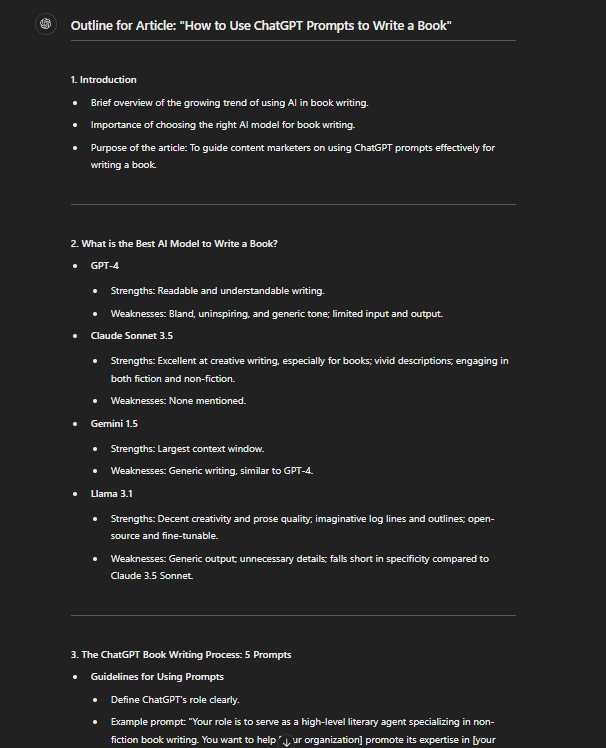
Many writers still feel skeptical about AI-generated content—often because they worry about its originality, tone, and emotional depth.
And their worries are kind of justified. ChatGPT may have advanced language skills, but it can still fall into predictable and uninspiring patterns.
However, there’s a middle ground worth exploring. ChatGPT can help generate content, but it also works well when using it as a editor assistant.
It can help you catch grammatical mistakes, simplifying complex sentences, enhancing flow, and ensuring consistency. When you use ChatGPT Canva, it can even give you suggestion comments right into a text editor !
That said, there’s also value in using ChatGPT to generate high-quality writing from scratch. By training the AI with your tone, providing well-defined prompts, and offering context, you can get it to draft content that reflects your intent.
Still, in this article, we’ll focus on how you can use ChatGPT specifically to edit your existing work and improve your drafts effectively.
9 ChatGPT Prompts to Edit Your Writing
These 9 prompts are part of the “Writer Critique” sequence in the Intellectual Lead prompting tool. You can access and inject them straight into ChatGPT using our free Chrome extension.
Let’s go through the 9 steps to refine your draft.
Step 1: Proofreading
This first prompt is about general proofreading. It acts as a primary sweep to catch grammar mistakes, misspellings, filler words, and overused vocabulary. It gives you a great baseline and even a readability score.
As a copy editor, your task is to provide feedback on our writing draft. You will provide a writing report based on the following instructions: Check for grammar mistakes, look for repeated or overused words, identify filler words, review sentence length and variability, ensure there are not too many pronouns and transition words, evaluate Flesch Reading Ease, and check for misspellings
Step 2: Structure
This step focuses on the flow of your phrases and sections. It will suggest transition paragraphs, point out redundancies, and recommend structural reordering to create a more consistent rhythm.
As a content editor, review this draft and evaluate its structure. Identify paragraphs that could be moved or combined to improve flow and coherence. Make suggestions for reordering sections to create a more logical progression of ideas.
Step 3: Opinion
Writing can sometimes feel too shy or unexpressive. This prompt pushes you to make your text sharper and more opinionated. It provides a fresh set of eyes to help you get straight to the point and express stronger attitudes.
As a ruthless editor, make this sharper and more opinionated without being cringe. Choose a clear stance, kill hedging, replace generic advice with specific claims
Step 4: Storytelling
Want to hook your reader better? This prompt asks ChatGPT to find narrative moments in your draft. It will suggest adding concrete scenes, sensory details, and descriptive language—especially in the introduction.
As a narrative editor, read through this draft and suggest ways to enhance the storytelling. Highlight areas where more descriptive language could improve the imagery, and point out sections where adding emotions could deepen the reader's connection to the story.
Step 5: Reference
Especially useful for non-fiction or academic writing, this prompt analyzes your text to suggest additional references and data sources. Since it often relies on the search feature, it might provide a section-by-section breakdown with statistics or studies to strengthen your claims.
Analyze this draft and identify areas where additional references or data are needed. Suggest and search online specific types of sources (e.g., case studies, statistics, or expert opinions) to strengthen the content
Step 6: Coherence
How strong is your argument? This prompt acts as a skeptical expert, poking holes in your text. It will give you the strongest objections to your claims, helping you identify weak spots and rephrase them to be more defensible.
Act like a skeptical expert who wants to poke holes in the arguments of this text. Assess the existing arguments and give the strongest objections to them. Give suggestions to strengthen the piece to survive those objections while staying honest.
Step 7: Conciseness
This step aims to remove redundancies and filler words. However, be careful: LLMs love to over-simplify writing, which can sometimes make it sound less human and more generic. Use your instinct and only accept the simplifications that actually improve impact without losing your unique style.
As a conciseness editor, review this draft and identify any sentences or phrases that could be simplified. Suggest edits to remove filler words and redundancies, ensuring each sentence is as straightforward and impactful as possible.
Step 8: Hook
The hook is crucial to draw attention immediately. This prompt gives you several alternative openings—from contrarian claims to weird questions—to ensure you stop the reader from scrolling past.
As a copywriter editor, assess the opening line of the text and suggest better alternative ones that make users stop scrolling for this topic. Use these hook types: contrarian claim, hard truth, weird question, tight story moment, sharp analogy, prediction.
Step 9: SEO
If you’re writing an article for the web, this final prompt will help optimize your draft for a specific keyword. It evaluates your headings and structure to ensure they match user intent. You will still need to manually implement the suggestions, but it provides a great roadmap.
As an SEO editor, review this draft and suggest SEO optimizations to target keyword ‘[keyword]’. Make sure the text fits the user intent when typing the keyword in the heading, subheading, tips, insights, Q&A, references that users are looking for.
A Final Warning About AI Editing
While these prompts turn ChatGPT into a rigorous copy editor, I strongly advise against asking the AI to completely regenerate your text. LLMs are not good at rewriting entire pieces; they tend to strip away your personal voice and replace it with generic, easily detectable AI patterns.
Instead, use these prompts to generate suggestions. Review the feedback, discard what doesn’t make sense, and apply the good edits manually yourself. Not only will your copy remain authentic and human, but you’ll also naturally improve your own writing skills in the process.
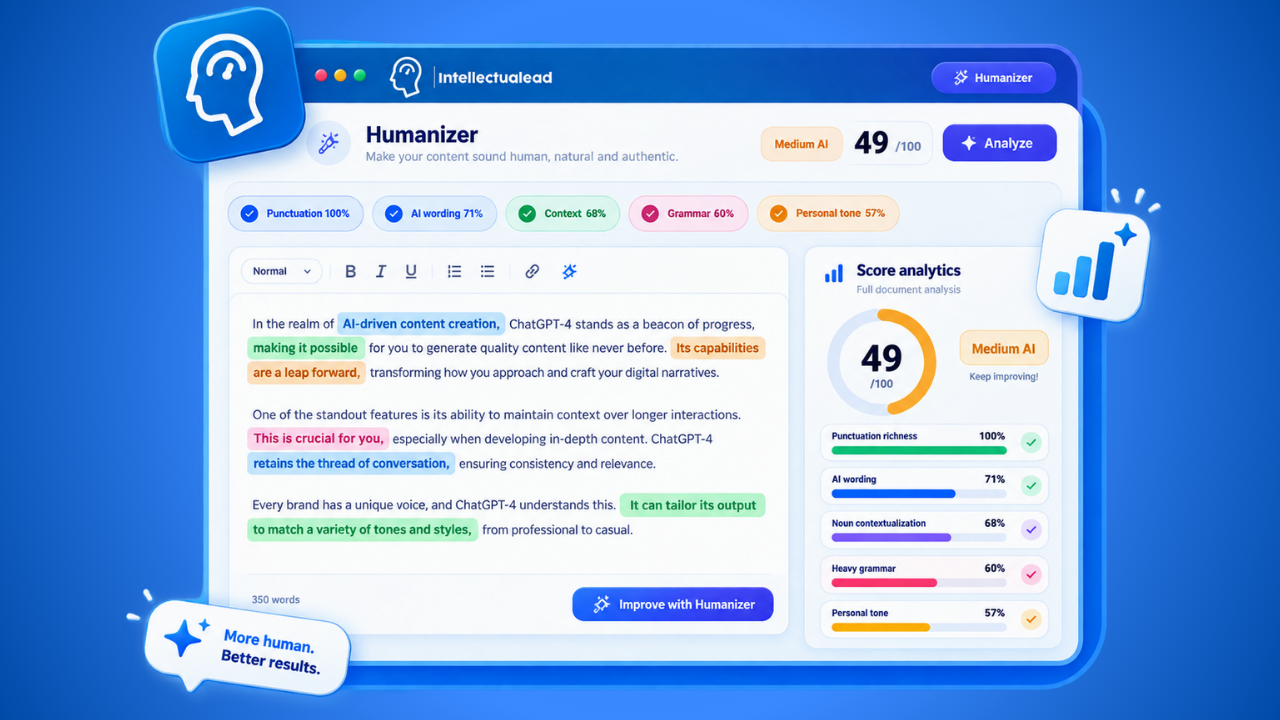
Get Rid of AI Slop
Get the free AI Humanizer and ready-to-use humanizing prompts.
Get the Free Toolkit
Buchert Jean-marc
Confirmed AI content process expert. Through his methods, he has helped his clients generate LLM-based content that fit their editorial standards and audiences expectations.
All Posts