

Table of Contents
- What is AI slop?
- Examples of AI slop in text
- 1. “Not only…but also” and balanced expressions
- 2. Everything comes in groups of three
- 3. Abstract nouns and nominalization
- 4. Predictably balanced arguments
- 5. Familiar AI vocabulary
- 6. Cliché expressions
- 7. Participial clauses everywhere
- 8. Predictable introductions and conclusions
- 9. No personal voice
- 10. Excessive formality and passive voice
- Examples of AI Slop in Real Life
- How to prevent AI slop
- Give the model more information
- Use real external sources
- Choose models based on writing quality
- Run a specific AI-slop editing pass
- FAQ
- What are common AI slop words?
- Why does AI writing sound repetitive?
- Is all AI-generated text considered AI slop?
- Does Google penalize AI slop?
- How do you remove AI slop from text?
As AI-generated content has spread online, readers have become increasingly familiar with the recurring patterns of LLM writing.
That’s where AI slop comes in.
In this guide, we’ll look closely at what AI slop in text actually means, the writing patterns that make it recognizable, and concrete examples you can find in your own drafts.
What is AI slop?
Cambridge Dictionary defines AI slop as low-quality digital content created by artificial intelligence.
Merriam-Webster similarly describesslop as low-quality digital content that is usually produced in quantity with AI.
For text specifically, you can think of AI slop as low-value AI-generated or AI-assisted writing that reaches the reader without enough research, originality, stylistic control, or human editing.
Recent research attempting to measure AI slop makes this distinction explicit.
In a 2025 ACL study, five people who frequently used LLMs for writing evaluated 300 nonfiction articles written either by humans or models including Claude and GPT-4o. Their majority judgment misclassified only one article. The researchers found that these readers relied on recognizable “AI vocabulary,” but also on broader signals such as formality, originality, and clarity.
Examples of AI slop in text

Here are some of the most common examples you should look for.
1. “Not only…but also” and balanced expressions
LLMs love balance.
You will regularly encounter sentences such as:
“AI not only helps marketers create content faster, but also enables them to improve quality.”
Or:
“AI isn’t replacing human creativity. It’s transforming it.”
There is nothing grammatically wrong with either sentence.
But models frequently organize ideas into this neat X versus Y structure:
- not only X, but also Y;
- not X, but Y;
- while X, it also Y;
- although X, Y.
2. Everything comes in groups of three
You have probably seen sentences like:
“AI allows you to create faster, work smarter, and scale efficiently.”
Or:
“You can research topics, generate articles, and optimize content.”
This is a tricolon: three parallel words, phrases, or clauses.
3. Abstract nouns and nominalization
One of the easiest ways to make writing heavier is to turn actions into abstract nouns.
Compare:
“The implementation of an optimization strategy enables the improvement of content performance.”
With:
“Optimize your strategy and your content can perform better.”
The first sentence contains plenty of information, but almost nothing happens.
That’s because actions such as implement and improve have been converted into nouns: implementation and improvement.
This process is called nominalization.
LLMs frequently produce noun-heavy sentences, which can make their writing sound formal and distant.
4. Predictably balanced arguments
AI also has a tendency to give every argument two equally polished sides.
For example:
“While AI offers significant efficiency gains, it also raises important concerns about authenticity.”
This sounds reasonable.
It also says very little about what you actually think.
5. Familiar AI vocabulary
Some words have become closely associated with LLM output because models use them so frequently:
- delve;
- crucial;
- critical;
- significant;
- transformative;
- revolutionize;
- landscape;
- navigate;
- unlock;
- empower;
- foster.
You’ve probably developed your own list already.
6. Cliché expressions
AI slop also has recognizable openings:
“In today’s rapidly evolving world…”
“In an increasingly competitive digital landscape…”
“In a world where technology continues to transform…”
And familiar transitions:
“It is important to note…”
“A crucial step is…”
“It is key to remember…”
“From X to Y…”
7. Participial clauses everywhere
Another common pattern looks like this:
“AI helps marketers analyze data, allowing them to make better decisions.”
Or:
“Brands can automate production, reducing costs and improving efficiency.”
Words such as:
- allowing;
- ensuring;
- creating;
- resulting;
- transforming;
- enabling;
regularly appear after a comma.
These are present participial clauses.
Past-participial constructions are similar:
“Powered by AI…”
“Driven by data…”
“Designed to improve…”
8. Predictable introductions and conclusions
AI likes to announce what each section is doing.
Introductions often start broadly:
“In today’s fast-paced world, artificial intelligence has become increasingly important…”
Conclusions often announce themselves just as clearly:
“In conclusion…”
“In summary…”
“To sum up…”
9. No personal voice
Compare:
“Marketers should carefully review AI-generated content before publication.”
With:
“If you publish five AI-assisted articles every week, read at least one draft aloud.”
The second sentence gives you a person, a situation, and something concrete to do.
10. Excessive formality and passive voice
Finally, watch for writing such as:
“It has been demonstrated that improvements in content quality can be achieved through the implementation of human editorial review.”
You can say:
“Human editors can improve AI content.”
The second version is shorter because you know who is doing what.
Passive voice has legitimate uses. So does formal writing.
But when passive constructions combine with nominalization, long sentences, and abstract vocabulary, you get the dense style readers increasingly associate with AI-generated text.
Examples of AI Slop in Real Life
I found several strong real-world cases of AI slop :
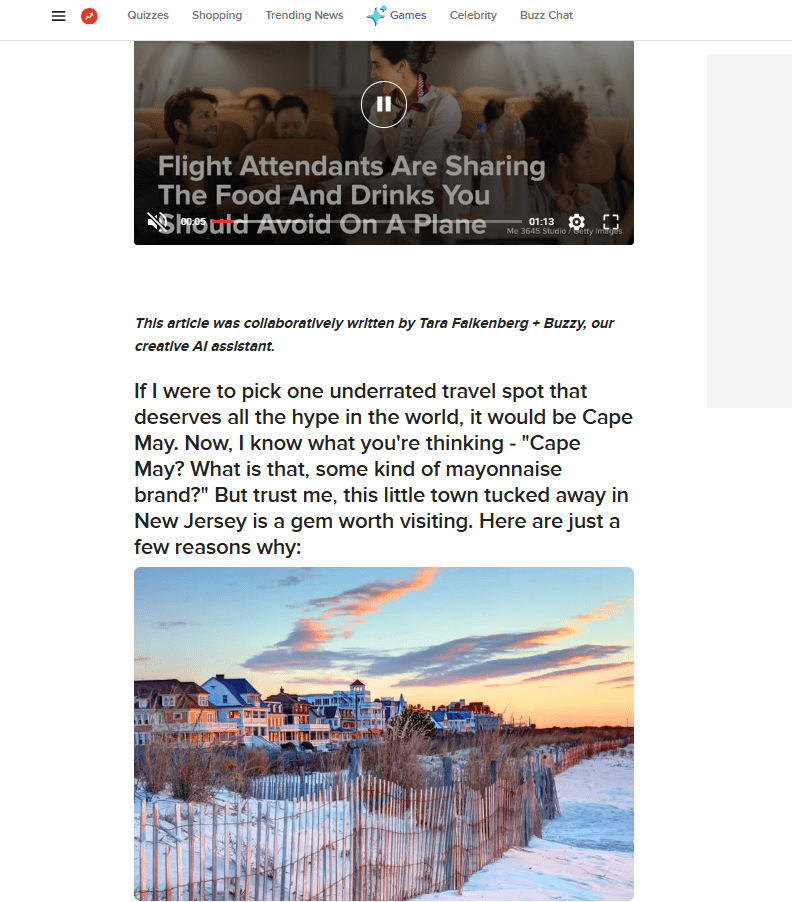
- BuzzFeed’s repetitive AI travel guides. In 2023, BuzzFeed published around 40 AI-assisted travel guides that became widely mocked because they kept recycling almost identical writing patterns. Multiple guides opened with variations of “Now, I know what you’re thinking…”, while destinations from Cape May to Aruba, Prague, Connecticut, and Saint Maarten were repeatedly described as a “hidden gem.”
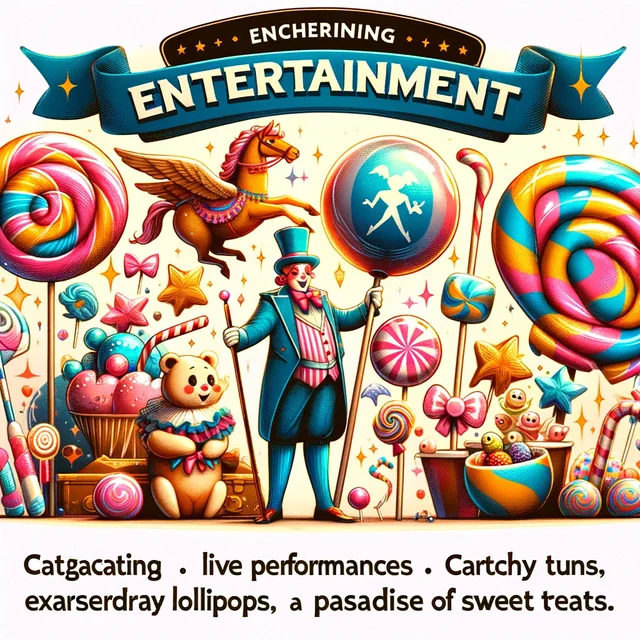
- The Glasgow Willy Wonka disaster and its AI-generated script. The 2024 “Willy’s Chocolate Experience” became an international viral story after customers arrived at a sparse Glasgow warehouse that looked nothing like the promotional material. The writing was part of the fiasco. The website promised bizarre things such as “encherining entertainment” and “exarserdray lollipops,” while actor Paul Connell told WIRED that the 15-page script he received was “AI-generated gibberish.”
- Gizmodo’s AI-written Star Wars chronology. In July 2023, Gizmodo published an article by “Gizmodo Bot” intended to put Star Wars movies and shows in chronological order. A Gizmodo editor quickly catalogued 18 problems, including missing titles, incorrect ordering, formatting issues, and repetitive descriptions. Staff publicly complained that the piece harmed the site’s credibility.
- Sports Illustrated’s fake-writer controversy. Futurism reported in 2023 that Sports Illustrated had published product-review content under authors whose profile images appeared to be AI-generated and whose identities could not be substantiated. One supposedly authored article contained the wonderfully empty observation that volleyball can be difficult to get into “especially without an actual ball to practice with.”
How to prevent AI slop

Give the model more information
Start with more than a keyword.
Give the model:
- the target reader;
- the problem they are trying to solve;
- the main argument;
- the structure;
- examples;
- claims you want included;
- claims you want avoided.
The more specific your input is, the less the model has to fill gaps with familiar wording and predictable transitions.
Use real external sources
Research is another effective way to reduce slop.
Give the model academic papers, interviews, customer calls, internal documents, datasets, expert quotes, or original research.
This does two things.
First, it gives the article more useful information.
Second, it forces the model to work with language, ideas, and examples that don’t come only from its default response patterns.
Choose models based on writing quality
A more intelligent or reasoning-heavy model is not automatically the better writer.
Different model families have different stylistic tendencies. Even within the same family, one model may produce lighter prose while another defaults to longer and more formal sentences.
Check our stylistic benchmark to find out which models currently sounds human-like.
Run a specific AI-slop editing pass
You have to edit any output generated by LLM. You cannot just skip this step.
Look for:
- repeated “not…but” constructions;
- tricolons;
- abstract nouns;
- passive sentences;
-ingclauses;- cliché transitions;
- predictable introductions;
- generic conclusions;
- repeated sentence lengths.
Finally, add what the model cannot create from nothing: your experience, examples, opinions, customer knowledge, and judgment.
That’s usually the difference between an AI draft and a piece of content worth publishing.
FAQ
What are common AI slop words?
Frequently noticed words include:
- delve;
- crucial;
- critical;
- significant;
- transformative;
- revolutionize;
- landscape;
- unlock;
- navigate;
- empower;
- foster.
But don’t treat this as a banned-word list.
A human writer can use “critical.” An LLM can avoid every word on this list and still produce generic content.
What matters is whether the wording is precise.
Instead of writing that a technology is “revolutionizing the marketing landscape,” explain exactly what it lets marketers do differently.
Why does AI writing sound repetitive?
LLMs generate text by predicting likely continuations based on patterns learned during training.
So when your instructions are broad, models often fall back on structures and expressions that work in many situations.
That can produce similar sentence lengths, balanced arguments, familiar transitions, and recurring rhetorical structures.
The effect becomes especially noticeable when you generate long articles from short prompts.
More detailed source material, clearer instructions, and manual editing can reduce this repetition.
Is all AI-generated text considered AI slop?
No.
AI is a tool.
You can use it for research assistance, outlining, rewriting, summarizing source material, drafting sections, or generating alternatives without producing AI slop.
The useful question isn’t:
“Was AI used?”
Ask instead:
“Does this page give the reader something worth reading?”
If you’ve added original research, useful examples, clear explanations, personal expertise, and careful editing, the finished content can be considerably different from the model’s default output.
Does Google penalize AI slop?
Google doesn’t simply treat a page as low quality because AI helped create it.
For SEO, the bigger risk is publishing large amounts of unoriginal content that adds little value for the person searching.
So trying to make AI content “undetectable” is the wrong objective.
Focus instead on usefulness, factual accuracy, originality, and whether the article actually satisfies the reader’s search intent.
How do you remove AI slop from text?
Start by identifying repeated patterns rather than asking an LLM to “humanize” everything at once.
Check your draft for repetitive sentence structures, abstract nouns, cliché expressions, predictable transitions, passive constructions, and generic statements.
Then add information the original draft was missing.
Include a specific example. State your opinion. Add data from your research. Explain what you’ve actually observed. Address a problem your customer regularly encounters.
Finally, read the text as a reader rather than as an editor.
If a paragraph sounds familiar but teaches you nothing new, rewrite it or remove it.
The best way to eliminate AI slop isn’t to disguise AI writing.
It’s to make the content more useful than the average AI response.

Get Rid of AI Slop
Get the free AI Humanizer and ready-to-use humanizing prompts.
Get the Free Toolkit
Buchert Jean-marc
Confirmed AI content process expert. Through his methods, he has helped his clients generate LLM-based content that fit their editorial standards and audiences expectations.
All Posts